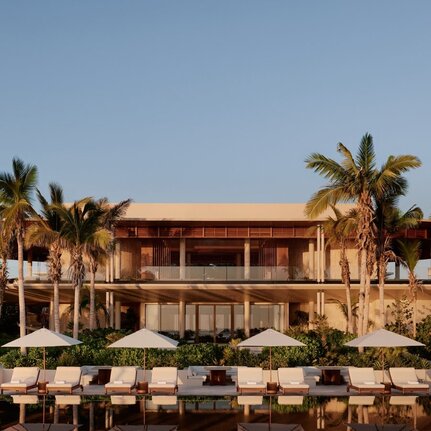
Amanvari, Mexico
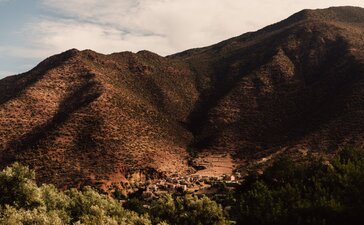
Set amid wild nature, Amanvari emerges where the distinct desert, mountain and ocean landscapes of Baja's East Cape converge.
Now open.

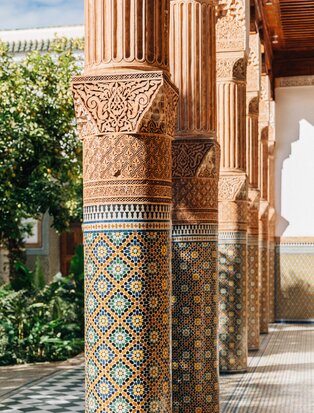
Marrakech’s architectural style is one defined by layers, textures and colours. It is a city that reveals itself quietly. Yet, in its heart, the bustling medina, it comes to life in its most vivid form. Here, a labyrinth of terracotta alleyways leads through carved wooden doors to grand riads with their flowing fountains, geometric tiles and opulent metal accents. Intimate and highly crafted, the medina captures the resplendence of Moroccan architecture.
For all its vibrancy and opulence, the medina also presents design sensibility. Pisé-stone walls offer cool interiors; parapets conceal private courtyards; and narrow street networks provide shade from the desert’s surrounding heat. It is in this delicate balance of practicality and flair that Marrakech architecture finds its own unique place.
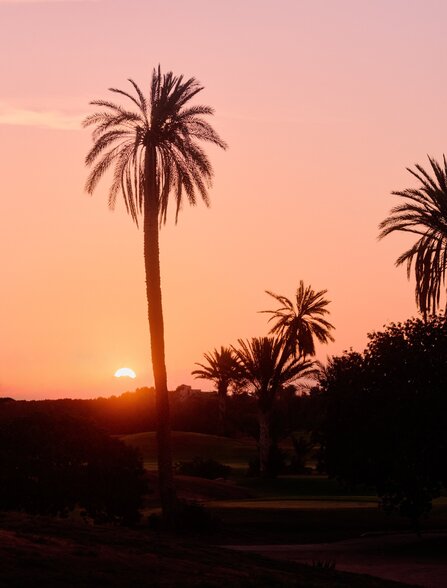
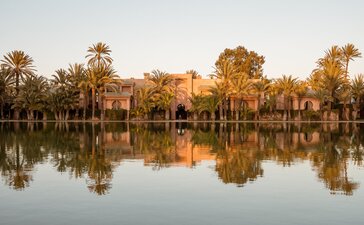
A language that influences visionaries across the globe, Moroccan design cues extend beyond the city’s rose-hued walls, among the palms, where Amanjena rises discreetly from its desert surrounds: at once an Aman sanctuary and an extension of its ancient landscape. In studying the resort's own architectural nuances, we delve deeper into Morocco’s; a reflection of Aman’s dedication to creating environments that extend – rather than impose on – the landscapes in which they reside.

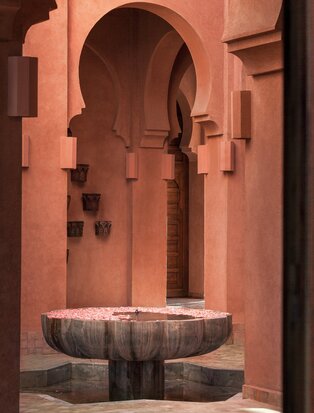
Walls in hues of dusky rose; arches rising above flowing fountains; geometry quietly restrained. Amanjena is a place where Moroccan architecture is found, yet its presence is softer and subtler. Distilling centuries of influence – Berber, Arabic, Andalusian and French – the resort’s design references present in gentle nods.
Earthen walls and arches, central courtyards, zellige tiles, ornamental plaster and carved wood: all these elements layer to create one, cohesive design, centred around the property’s reflective bassin pools. Akin to strolling through the medina architecture, walking through the resort grounds you in place with Aman’s signature minimalism bringing a welcome sense of calm, spaciousness and room to breathe.
Designed by the late Ed Tuttle, a visionary and long-term Aman collaborator, Amanjena draws inspiration from El Badi Palace, the ruined 16th-century palace built by Sultan Ahmed al-Mansour. Once a masterpiece of Islamic architecture, El Badi Palace was famed for its monumental scale, sunken gardens and vast shaded courtyards. Rather than emulate its grandeur, Tuttle reimagined the palace’s symmetry, volume and use of light and shadow, creating a contemporary Aman sanctuary.
Design references can be observed throughout the resort. Vaulted ceilings that flood spaces with light, long, linear water channels that create seamless flow, and a palette of rose, terracotta and turquoise cueing to palatial grandeur. While traditional Moroccan architecture historically leans towards embellishment, Amanjena offers a masterclass in restraint.
Of course, Amanjena’s delicate expression of Moroccan design is not without thanks to the brand’s design DNA: creating spaces that have a profound effect on physical and mental wellbeing through their natural, peace-inducing forms. This careful balance between local inspiration and Aman modernity brings a feeling of harmony to guests, creating the perfect equilibrium.
The juxtaposition can be experienced with a simple stroll through the resort: archways echo old Arabia, yet are formed of clean, Aman lines; pools reference traditional irrigation systems, yet encourage moments of calm reflection; and walls tower high, as if fortified, yet the courtyards they form bring a sense of openness and space. The effect is an architectural exhale that encourages the shoulders to drop, adding to the immediate sense of comfort and belonging for which Aman has become so well renowned.
For those seeking exploration of Marrakech architecture, Amanjena offers a fresh perspective. True to its name, meaning ‘peaceful paradise’ in Sanskrit, it invites guests to slow down, away from the bustle of the city and its medina, and observe local design principles presented in a digestible form.
Geometry, symmetry, light and shade. Amanjena doesn’t simply imitate Moroccan design queues; it offers something entirely unique, yet with the upmost respect for tradition.